The Myth of Soaking Wood Chips (And 4 Other BBQ Lies)
Last updated: April 9, 2026
Sacred Cows Make the Best Brisket
Barbecue culture is built on tradition, and tradition is built on repetition. Someone says something that sounds plausible, someone else repeats it, and within a few years it's gospel that nobody questions because everybody "knows" it's true. The problem is that some of these traditions are wrong — not just slightly wrong, but demonstrably, measurably, experimentally wrong. And following them makes your barbecue worse.
Here are five BBQ "facts" that I believe are lies, supported by actual testing where possible and basic physics where testing isn't practical.
Lie #1: Soak Your Wood Chips Before Smoking
This is the most persistent myth in barbecue. "Soak your wood chips for 30 minutes to an hour before adding them to the fire. They'll smoke longer and won't burn as fast." You'll find this advice in cookbooks, on grill manufacturer websites, and from well-meaning dads at every cookout in America.
It's wrong. Here's why.
Wood is not a sponge. The cell structure of seasoned hardwood is largely closed — the cells have dried out and collapsed. When you "soak" wood chips, water absorbs into the surface layer to a depth of maybe 1-2mm over 30 minutes. The interior of the chip remains bone dry. I've tested this by soaking chips for 24 hours, then splitting them open with a knife. The interior is dry.
When you put soaked chips on a hot fire, the surface water evaporates. This creates steam — which is not smoke. Steam does not flavor food. It also drops the fire temperature temporarily, which delays the onset of actual combustion and can cause the fire to smolder rather than burn cleanly. Smoldering produces bitter, acrid, creosote-laden smoke — exactly what you don't want.
What soaked chips actually do: they produce steam for 5-10 minutes (no flavor contribution), then they dry out and begin smoking exactly like dry chips would have from the start. The only effect of soaking is a 5-10 minute delay in smoke production and a temporary drop in fire temperature. Neither is desirable.
Use dry chips or, better yet, use wood chunks. Chunks are larger, take longer to combust, and produce a steadier stream of smoke over a longer period. This is the actual solution to the problem that soaking was supposed to solve.
Lie #2: Searing "Seals In" the Juices
This one has been debunked so many times that I feel silly including it, but I still hear it at least once a month from otherwise knowledgeable cooks. The claim: by searing meat at high temperature first, you create a "crust" that seals the surface and prevents moisture from escaping during cooking.
This was disproven in 1930 by food scientist Harold McGee, but somehow survived another century of repetition. The debunking is simple: weigh a steak before cooking it with a sear-first method, and weigh the same steak after cooking. Then cook an identical steak without searing and weigh it. The seared steak loses more moisture, not less, because the high heat causes more rapid surface evaporation and drives internal moisture toward the cooler center and out the sides.
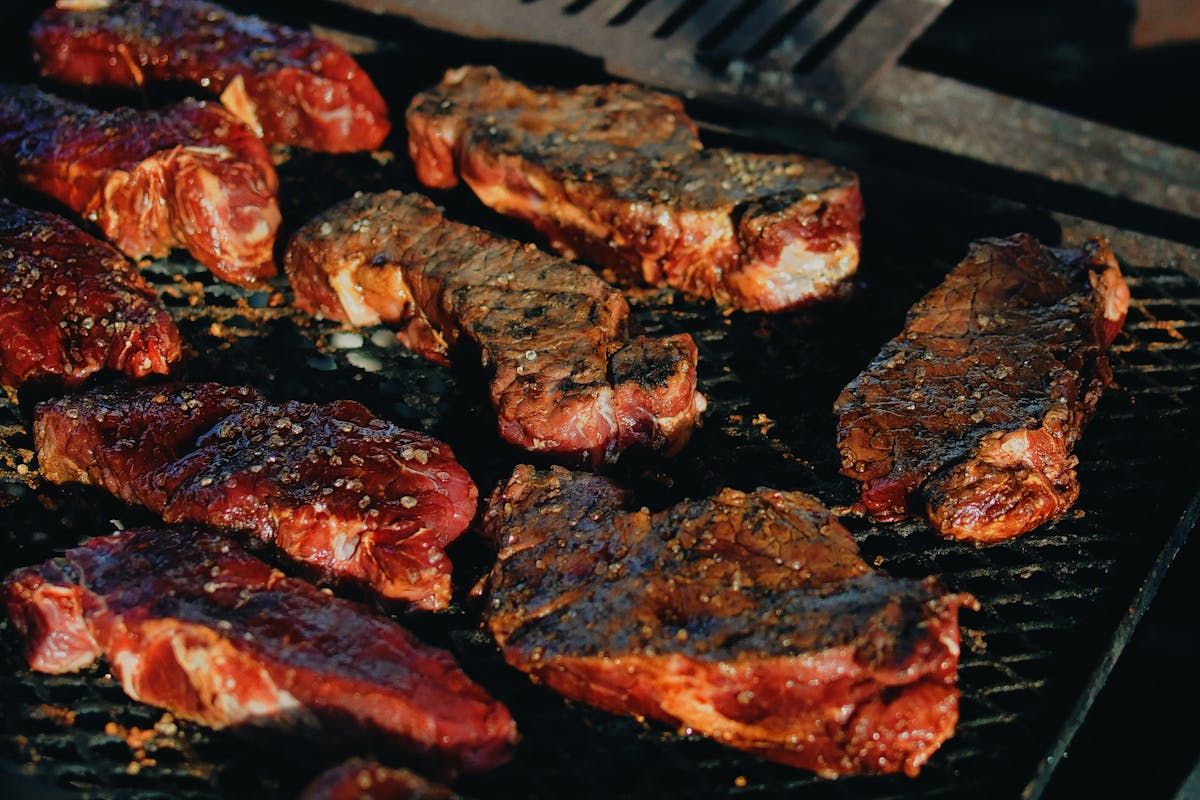
Searing is important — it creates Maillard reaction compounds (hundreds of complex flavor molecules) that taste incredible. Sear your steaks. Sear your roasts. But sear them for flavor, not for moisture retention. The crust is delicious. It is not a waterproof seal.
Reverse-searing (cooking low-and-slow first, then searing at the end) actually retains more moisture than traditional sear-first cooking, because the gradual temperature rise causes less total moisture loss. The science supports exactly the opposite of the traditional advice.
Lie #3: Resting Meat Lets the Juices "Redistribute"
Wait — didn't I just advocate for resting meat in my pork shoulder and tomahawk recipes? I did. But the reason most people give for resting is wrong, and the wrong reasoning leads to wrong rest times.
The common explanation: when meat is hot, the protein fibers are contracted and squeezing moisture to the surface. When you rest it, the fibers relax and "reabsorb" the moisture, redistributing it evenly throughout the cut. This sounds logical. It's also a significant oversimplification.
What actually happens: during cooking, the proteins (primarily myosin and actin) denature and contract, squeezing water out of the muscle fibers and into the spaces between them. This free water migrates toward the surface and toward the center of the cut due to pressure gradients. When you rest the meat, the temperature equalizes, the pressure gradients diminish, and some of the free water is reabsorbed into the protein matrix as it partially re-gels.
But here's the part nobody mentions: a significant portion of that moisture doesn't "redistribute" — it evaporates from the surface during the rest. A hot steak resting uncovered on a cutting board is actively losing moisture to evaporation the entire time it sits. There's a diminishing-returns curve: the first 5-10 minutes of rest recover the most moisture. After 15-20 minutes, you're losing more to evaporation than you're gaining from redistribution.
For steaks: rest 5-7 minutes, no more. For large cuts (brisket, pork shoulder): rest in an insulated container (cooler) for 1-3 hours, where the enclosed environment reduces evaporative loss. For poultry: 10-15 minutes tented with foil. The correct rest time depends on the size of the cut and the environment, not on some universal rule about "letting the juices settle."
Lie #4: The Stall Is Something to "Push Through"
The stall — that maddening plateau at 150-170°F (77°C) where your brisket or pork shoulder's internal temperature stops rising for hours — is not an obstacle to overcome. It's a critical phase of the cooking process where something important is happening.
During the stall, the rate of evaporative cooling from the meat's surface equals the rate of heat input from the cooker. The surface moisture is evaporating, which cools the meat at exactly the same rate that the smoker heats it. The temperature flatlines not because something is wrong, but because physics is doing its job.
This evaporative cooling phase has two important effects. First, it's when the bark forms. The slow dehydration of the surface, combined with the Maillard reaction and sugar caramelization from your rub, creates the thick, crunchy exterior that defines great barbecue. If you wrap your brisket the moment it stalls (the "Texas crutch"), you stop the bark formation process. The bark you've built so far gets steamed and softened inside the wrap.
Second, the stall period is when collagen conversion begins in earnest. Collagen — the tough connective tissue that makes cheap cuts tough — begins converting to gelatin at around 160°F (71°C). This process takes time at temperature. Rushing through the stall by wrapping or by cranking the heat means less collagen conversion, which means tougher meat.
The stall isn't something to "push through" — it's something to respect. If you wrap (and I sometimes do, for practical time reasons), do it knowing that you're making a trade-off: faster cooking at the cost of bark quality and potentially less complete collagen conversion. That trade-off can be worth it. But pretending it's free — that wrapping gives you the same result faster — is a lie.
Lie #5: Bone-In Meat Has More Flavor Than Boneless
Bone doesn't flavor meat. Bone is made of calcium, phosphorus, and collagen. During cooking, a small amount of collagen from the bone surface dissolves into the immediate surrounding tissue — this is measurable but tiny, affecting perhaps the inner 1-2mm of meat adjacent to the bone.
What bone actually does: it insulates the meat nearest to it, causing that area to cook more slowly. This is why the meat nearest the bone on a bone-in ribeye is often the most perfectly medium-rare — it's being shielded from heat by the bone's mass. This is a useful effect, but it's about cooking dynamics, not flavor transfer.
The reason bone-in steaks taste better than boneless steaks at most restaurants has nothing to do with the bone and everything to do with the fact that butchers cut bone-in steaks thicker. A bone-in ribeye is typically 1.5-2-inch (5.1 cm) thick. A boneless ribeye from the same part of the animal is typically cut to 1-1.25-inch (3.2 cm). Thicker steaks cook more evenly, have more temperature gradient control, and are harder to overcook. The bone isn't adding flavor — the extra thickness is improving cooking dynamics.
Buy bone-in if you like the presentation, if you want the insulating effect, or if you enjoy gnawing the bone (which is genuinely satisfying). But don't pay a premium for bone-in under the belief that the bone is making your steak taste better. It isn't.
The Cost of Bad Information
Every one of these myths makes your barbecue worse in specific, measurable ways. Soaking chips delays smoke and drops fire temperature. "Sealing in juices" justifies overcooking the exterior. Misunderstanding rest leads to either cutting too early (losing juice) or resting too long (cold, dry meat). Wrapping too early at the stall sacrifices bark. And paying premium for bone-in when you could get the same meat boneless and thicker is just bad shopping.
Question everything. Test things yourself. Keep a log. The only BBQ truth that's universal is that temperature doesn't lie — everything else is worth verifying.