Meater Plus Wireless Thermometer Review — Brilliant Concept, Frustrating Execution
Last updated: April 8, 2026
The dream of a truly wireless meat thermometer is real — when the Bluetooth doesn't drop, the ambient sensor isn't lying, and the app doesn't crash. A 5.8 that I desperately wanted to be an 8.
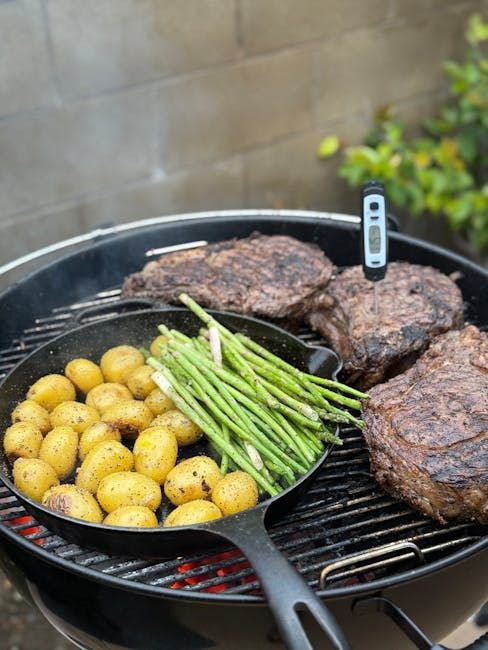
Photo Gallery
I Wanted to Love This Thing
Let me get my bias out front: I've been waiting for a truly wireless meat thermometer for years. The idea of sticking a single probe into a brisket, closing the lid, and monitoring everything from my phone without routing wires through vents or dealing with cable management — that's the dream. The Meater Plus is the closest thing to that dream that exists today. And it still falls short in ways that matter.
I've been using the Meater Plus for six months across roughly 40 cooks on everything from a Weber Kettle to a Kamado Joe Classic III to a full-size offset smoker. I've used it in ambient temperatures from 35°F (2°C) to 95°F (35°C), in cookers ranging from 225°F (107°C) to 500°F (260°C), and in every weather condition short of actual rain. I have opinions.
What the Meater Plus Gets Right
The form factor is genuinely inspired. The probe is about the size of a thick pencil — 5.2-inch (13.2 cm) long, lightweight, with no wires attached. You insert the pointed end into the meat until the safety notch is fully submerged, and the exposed ceramic sensor at the back end reads ambient temperature inside the cooker. The charging block is a small wooden box that holds the probe magnetically and charges it via an internal AAA battery. It's elegant. It looks good on a counter. It feels like a premium product.
The app, when it works, is excellent. The guided cook feature walks beginners through target temperatures for different meats and doneness levels. The cook estimator uses the rate of temperature rise to predict when your meat will be done — and when this prediction is accurate, it's genuinely useful for timing side dishes and rest periods. The graphing feature shows internal and ambient temperature over time, which helps you understand your cooker's behavior.
Internal temperature accuracy is solid. I've cross-referenced the Meater Plus against my ThermoWorks Thermapen ONE and my ThermoWorks Signals on dozens of cooks. The internal probe reads within ±1-2°F (-17°C) of the Thermapen consistently, which is well within acceptable range. For the thing it's primarily designed to do — tell you the internal temperature of your meat — it works.
Where It Falls Apart: Bluetooth Range
The Meater Plus claims 165-foot Bluetooth range via the repeater block. In my testing, real-world range with the probe inside a closed cooker is 40-80 feet (24.4 m) depending on the cooker material. Inside a ceramic Kamado Joe, the range drops to about 30 feet (9.1 m). Inside a thick steel offset smoker, I've lost connection at 25 feet (7.6 m). The ceramic and steel act as partial Faraday cages, attenuating the Bluetooth signal from the probe to the repeater block.
This matters because the whole point of a wireless thermometer is to walk away. If I have to keep my phone (or the repeater block) within 30 feet (9.1 m) of the cooker, I'm barely gaining any freedom compared to a wired thermometer with a long cable. My ThermoWorks Signals with its wired probes has a wireless range of 300+ feet from the base unit to the app — and that range isn't affected by the cooker material because the transmitter is outside the cooker.
I've had the connection drop during a 14-hour brisket cook at least four times in a single session. Each time, I had to walk back to within range, wait for it to reconnect (which can take 30-60 seconds), and confirm I hadn't missed a critical temperature event. The anxiety this creates defeats the purpose of having a wireless thermometer.
Where It Falls Apart: Ambient Temperature Accuracy
This is the bigger problem, and the one that gets less attention in most reviews. The Meater Plus's ambient temperature sensor is the ceramic element at the exposed end of the probe. It measures the air temperature near the probe insertion point, which is not the same as the temperature at grate level, which is not the same as the temperature at the dome, which is not the same as the actual cooking environment temperature.
In my testing, the ambient sensor reads 15-40°F (4°C) lower than actual grate-level temperature measured by a calibrated thermocouple probe placed at the same position on the grate. The discrepancy is worse at higher temperatures and varies with probe insertion depth. At 250°F (121°C) smoker temperature, the Meater Plus ambient sensor typically reads 225-235°F (113°C). At 400°F (204°C), it reads 350-370°F (188°C).
This matters because the cook time estimator uses the ambient temperature reading in its algorithm. If the ambient reading is 20°F (-7°C) low, the cook time estimate is wrong — sometimes by over an hour on long cooks. I've had the app tell me a pork shoulder would be done at 6 PM when it actually finished at 7:30 PM. That's the difference between dinner at a reasonable hour and hungry, impatient guests.
ThermoWorks solved this problem years ago by keeping the ambient sensor outside the cooker on a clip attached to the grate. It's less elegant — you have a wire running from the probe through the grate to an external clip — but the reading is dramatically more accurate. Engineering trumps elegance when dinner is on the line.
The App: Good Design, Questionable Reliability
The Meater app is well-designed from a UX perspective. It's intuitive, the graphics are clean, and the guided cook feature is helpful for beginners. But I've experienced three app crashes during active cooks on iOS over six months, and each time I lost the historical temperature data for that cook. The app also has a habit of "forgetting" a cook if your phone goes to sleep for too long — you come back and it's showing a blank screen instead of your temperature graph.
Cloud connectivity via Meater Link (using a separate device as a WiFi bridge) works but adds complexity. You need a dedicated phone or tablet running the Meater app within Bluetooth range of the block, which then relays data to the cloud for access from anywhere. It works. It's also absurd that you need three devices (probe, block, bridge phone) to achieve what a $99 ThermoWorks Smoke does with two wired probes and a standalone receiver.
The Comparison Nobody Makes Honestly
The ThermoWorks Smoke ($99) with two wired probes gives you more accurate ambient readings, longer wireless range, and essentially zero connectivity issues. You deal with wires. That's the trade-off.
The FireBoard 2 Drive ($229) gives you four probe ports, WiFi connectivity, cloud logging, and the ability to control a fan for automated temperature management. Wired probes, but a fundamentally more capable system.
The ThermoWorks Signals ($229) gives you four probe ports, Bluetooth and WiFi, and the gold standard in accuracy. Again, wired.
The Meater Plus ($100) gives you no wires and a beautiful app. That's the entire value proposition. Whether that trade-off is worth accepting inferior ambient accuracy, shorter effective range, and connectivity drops is a personal decision. For me, after six months, I've gone back to wired probes for any cook that matters and use the Meater Plus as a secondary "nice to have" when I'm doing casual grills and don't care about precise monitoring.
Final Score: 5.8/10
The concept is an easy 9. The execution is a frustrating 5. I've averaged those emotions into a 5.8 that reflects a product which works beautifully in ideal conditions and fails you exactly when reliability matters most — during long, important cooks where you've invested hours of time and expensive cuts of meat. If Meater can solve the Bluetooth range issue (perhaps with WiFi direct) and improve the ambient sensor accuracy, they'll have a genuinely great product. Today, they have a promising prototype that's been priced and marketed as a finished solution.
Specifications
| battery | Rechargeable AAA (included), ~24 hours continuous |
| charging | Magnetic dock (block doubles as charger) |
| weight oz | 0.36 |
| sensor type | Dual ceramic sensors (internal + ambient) |
| connectivity | Bluetooth to block, block to phone |
| ambient range | 32°F to 527°F (0°C to 275°C) |
| internal range | 32°F to 212°F (0°C to 100°C) |
| wireless range | 165 ft (50m) via repeater block |
| ambient accuracy | ±3°F (±1.5°C) — see editorial for reality |
| internal accuracy | ±1°F (±0.5°C) |
| probe length inches | 5.2 |
Pros
- Truly wireless design — no cables to route through cooker vents
- Internal meat temperature accuracy is solid at ±1-2°F (-17°C)
- Well-designed app with helpful guided cook feature and temperature graphing
- Elegant form factor and premium-feeling charging block
- Cook time estimator is useful when ambient readings are accurate
Cons
- Real-world Bluetooth range is 30-80 feet (24.4 m) — not the advertised 165 feet (50.3 m) — depending on cooker material
- Ambient temperature sensor reads 15-40°F (4°C) lower than actual grate-level temperature
- Cook time estimates can be off by over an hour due to ambient sensor inaccuracy
- App crashes have caused loss of cook data three times in six months
- Requires a separate bridge device for WiFi/cloud connectivity — adding complexity that defeats the simplicity promise
- Connection drops during long cooks create monitoring anxiety
The Verdict
Meater Plus Wireless Thermometer
A brilliantly designed wireless thermometer that's let down by real-world Bluetooth range, questionable ambient temperature accuracy, and app reliability issues. Use it for casual grills; rely on wired probes for anything that matters. The concept deserves a 9, the execution earns a 5.8.
Where to Buy
This is an affiliate link. We may earn a commission at no extra cost to you.