Oklahoma Joe's Highland Offset Smoker Review — The Entry-Level Offset That Teaches You by Making You Suffer
Last updated: April 8, 2026
It leaks smoke from every seam, the temperature swings will test your patience, and the factory dampers are a joke. But at $300, it's still the best way to learn real offset smoking — if you're willing to put in the work.
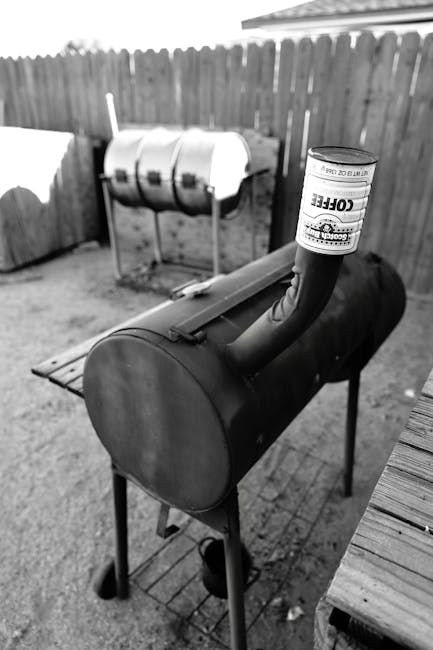
Photo Gallery
The Smoker That Builds Character
Twenty years ago, I learned to smoke meat on a cheap offset that was probably worse than this one. No gaskets, thin steel, a firebox door that didn't close properly, and a chimney that was mounted in entirely the wrong place. I ruined a lot of meat on that smoker. I also learned more about fire management, airflow dynamics, and patience than I could have learned on any amount of fancy equipment. The Oklahoma Joe's Highland is the modern version of that experience.
Let me be very clear about something: this is not a good smoker in the way that a Yoder Wichita is a good smoker, or even in the way that a Weber Smokey Mountain is a good smoker. The Highland is a $300 offset that's built to a $300 standard. Every compromise it makes is a teaching moment, and that's either its greatest feature or its most fatal flaw, depending on your temperament.
Out of the Box: Prepare for Disappointment
Assembly takes about two hours if you've built things before, three or more if you haven't. The instructions are adequate but not great. When you're done, you'll stand back and look at your new smoker and think it looks great — heavy black steel, the classic offset shape, a big cooking chamber with a serious firebox hanging off the side. It looks like what smoking is supposed to look like.
Then you light your first fire, and reality sets in.
Smoke pours from every seam. The door to the cooking chamber doesn't seal — you can see daylight around the edges. The firebox door has a gap that whistles when the wind hits it right. The dampers are stamped metal discs that slide loosely in their tracks and have no detent or click to hold a position. Within five minutes of your first fire, you'll understand why experienced pitmasters talk about "modifying" offset smokers.
This is by design. Not intentionally, of course — Oklahoma Joe's would love to ship a perfectly sealed smoker. But at $300 retail, the manufacturing tolerances simply don't support tight fits. And honestly? I think that's fine. Because fixing these issues is how you learn what they do.
The Mods You Will Need (Not Optional)
Here's the modification list that every single Highland owner eventually arrives at. These aren't suggestions — they're requirements if you want consistent results:
High-temperature gasket tape: $15 on Amazon. Apply it to the cooking chamber door and the firebox door. This single modification reduces smoke leakage by 60-70% and is the single most impactful improvement you can make. Nomex gasket material, 1/2-inch (1.3 cm) by 1/8-inch (0.3 cm), self-adhesive. Takes twenty minutes to apply.
Baffle plate / tuning plates: $40-80 depending on source. The Highland's cooking chamber has a significant temperature gradient — I've measured a 75°F (24°C) difference between the firebox end and the chimney end at 250°F (121°C). Tuning plates (adjustable steel baffles that sit between the firebox opening and the cooking grates) even this out to roughly 15-20°F (-7°C) variance. You can make your own from steel plate or buy pre-made ones from LavaLock or BBQSmokerMods.
Chimney extension: Some pitmasters extend the chimney down to grate level inside the cooking chamber, which forces the smoke and heat to travel across the meat before exiting. It's a $20 mod that makes a noticeable difference in smoke flavor distribution. Not strictly necessary but worth doing while you're already modifying things.
Better thermometer: The factory thermometer is off by 30-50°F (10°C). Replace it or, better yet, just ignore it entirely and use a multi-probe wireless thermometer like the ThermoWorks Signals or even a cheap ThermoPro TP20. You need to know the actual temperature at grate level, not what the lid says.
Total modification cost: roughly $75-115. So your $300 smoker becomes a $375-415 smoker, which is still dramatically less than a Weber Smokey Mountain ($400-500) or a Pit Barrel Cooker ($370), and offers a fundamentally different cooking experience than either.
Cooking on the Highland: The Good
Once you've done the basic mods and learned the fire management (more on that in a moment), the Highland produces genuinely excellent barbecue. I've cooked pork shoulders that took trophies at local KCBS-sanctioned events on this exact smoker. The large cooking chamber gives you 619 sq in (3,992.6 cm²) on the main grate, which is enough for two packer briskets or four pork shoulders. The firebox is sized correctly for real split wood — 16-inch (40.6 cm) logs fit perfectly, and you can build a proper coal bed that sustains clean combustion for hours.
The flavor from a stick-burning offset is different from anything a pellet smoker, kamado, or water smoker produces. It's more complex, more layered, and — when you get it right — unmistakably superior. The Highland, despite all its flaws, gives you access to that flavor profile at a price point that makes it accessible to almost anyone.
I've done 14-hour brisket cooks on this smoker and held 250°F (121°C) within a 10-degree window for six consecutive hours — after mods and after learning the airflow patterns of this specific unit. That's not world-class consistency, but it's more than enough to produce competition-quality barbecue.
Cooking on the Highland: The Bad
Fire management on this smoker is a full-time job. You cannot light it, set it, and go watch football. Every 45-60 minutes, you need to add wood, adjust the firebox damper, and check your temperatures. On windy days, the thin steel and imperfect seals mean that gusts can spike your temperature by 30-40°F (4°C) in minutes. On cold days (below 40°F (4°C) ambient), holding 225°F (107°C) requires significantly more fuel than a thicker-walled smoker.
The firebox burns through wood faster than a premium offset like a Yoder or a Lang because the thinner steel radiates heat less efficiently. Where a Yoder Wichita might use 15-18 pounds of wood for a 12-hour brisket cook, the Highland will burn through 22-28 pounds. Over a year of regular smoking, that fuel cost difference adds up.
Rust is inevitable. The paint is adequate but not powder-coat quality. After one year of regular use, I'm seeing surface rust on the firebox exterior, around the chimney cap, and on the underside of the cooking chamber. You can manage this with high-temp paint touch-ups, but it's a recurring maintenance task that doesn't exist on a stainless steel or ceramic cooker.
The Competition at This Price
The Weber Smokey Mountain 22" ($400-500) is easier to use, more fuel efficient, and produces excellent barbecue with zero modifications. But it's a vertical water smoker, not an offset — the cooking experience is fundamentally different and less educational.
The Pit Barrel Cooker ($370) is a hook-and-hang vertical smoker that's virtually foolproof. Again, excellent barbecue, but a completely different experience.
The Dyna-Glo Wide Body Offset ($250-300) is the Highland's closest competitor. Similar build quality, similar issues, slightly less cooking space. It's a toss-up between them; I give the edge to the Highland for the larger firebox and better parts availability.
The Char-Griller Smokin' Ace ($350) is an offset that tries to split the difference between quality and price. I haven't spent enough time with one to give a definitive comparison, but initial impressions suggest similar build quality with a slightly better seal out of the box.
Who Should Buy This
Buy the Oklahoma Joe's Highland if you want to learn real offset smoking and you're willing to invest time — not just money — into the process. If you view modifying, adjusting, and mastering a flawed tool as part of the fun, this smoker will teach you more about fire, smoke, and patience than any amount of YouTube videos or online courses.
Do not buy this smoker if you want to set it and forget it, if you get frustrated by equipment that requires constant attention, or if you just want great barbecue with minimal effort. For that, buy a Weber Smokey Mountain or a pellet smoker and save yourself the aggravation.
Final Score: 6.5/10
The score is low because I grade products on what they are out of the box, and out of the box, the Highland is a mediocre smoker with serious sealing issues and temperature control problems. But with $100 in modifications and a willingness to learn, it becomes the foundation for some of the best barbecue you'll ever make. The gap between the 6.5 I'm giving it and the 8.0 it could be after mods is filled entirely by your effort. That's either the best sales pitch or the worst, depending on who you are.
Specifications
| grates | Porcelain-coated steel + cast iron |
| dampers | Adjustable firebox + chimney |
| made in | China (assembled) |
| warranty | 1 year (limited) |
| fuel type | Charcoal / Wood |
| weight lbs | 181 |
| material gauge | Heavy-gauge steel |
| dimensions inches | 57 x 33 x 53 |
| cooking area sq in | 619 |
| firebox area sq in | 281 |
| total cooking area sq in | 900 |
Pros
- Large 619 sq in (3,992.6 cm²) cooking chamber fits two packer briskets or four pork shoulders
- Firebox is correctly sized for real 16-inch (40.6 cm) split wood logs
- Produces authentic stick-burner flavor that pellet and kamado cookers can't match
- At $300, it's the most affordable entry point into real offset smoking
- Teaches fire management fundamentals that make you a better pitmaster overall
Cons
- Leaks smoke from every seam — door gaskets are mandatory aftermarket modifications
- 75°F (24°C) temperature gradient across the cooking chamber without tuning plates
- Factory thermometer is off by 30-50°F (10°C) and is essentially decorative
- Thin steel construction burns through 30-40% more wood than premium offsets
- Surface rust appears within the first year, especially on the firebox exterior
- Requires constant attention — you cannot leave this smoker unattended for more than 45-60 minutes
The Verdict
Oklahoma Joe's Highland Offset Smoker
A $300 lesson in fire management that leaks smoke, burns through wood, and requires mandatory modifications — but rewards patience with genuinely excellent stick-burner barbecue. The best entry-level offset if you're willing to earn it.
Where to Buy
This is an affiliate link. We may earn a commission at no extra cost to you.