Jealous Devil Lump Charcoal Review: The Fuel That Burns Longer and Hotter
Ultima actualizacion: 8 de abril de 2026
Premium charcoal that burns longer and hotter than the competition, but at a price that makes you question whether charcoal should ever cost this much. For serious cooks, the answer is probably yes.
Galeria de Fotos
Let Us Talk About the Elephant in the Bag
Jealous Devil is expensive charcoal. Not kind-of-expensive. Not oh-that-is-a-little-more-than-usual expensive. It is roughly double the price of mainstream premium lump charcoal, and in some markets with shipping, it can hit $3.00 per pound. For a consumable product that literally turns to ash, that is a hard pill to swallow.
So the question is not "is Jealous Devil good charcoal?" — it is objectively excellent charcoal. The question is: is it good enough to justify the price? And after burning through over 200 pounds across six months of testing, my honest answer is: it depends entirely on how you cook.
The Performance Numbers
I ran controlled burn tests using identical Weber Kettles with 5 pounds of charcoal each, comparing Jealous Devil against B&B Oak, Royal Oak, FOGO Premium, Cowboy, and Kamado Joe Big Block. Here is what I found:
- Time above 400°F (204°C): Jealous Devil averaged 2 hours 48 minutes. B&B Oak: 1 hour 52 minutes. Royal Oak: 1 hour 35 minutes. FOGO: 2 hours 22 minutes.
- Peak temperature: 725°F (385°C) at the grate (all vents open). Competitive with FOGO (710°F (377°C)) and ahead of B&B (655°F (346°C)).
- Ash production: 2.8% by weight. FOGO: 3.4%. B&B: 5.8%. Royal Oak: 12.3%.
- Time to grilling temp (450°F (232°C)): 22 minutes — notably slower than B&B (15 minutes) and Royal Oak (14 minutes) due to the extreme density of Quebracho wood.
The numbers do not lie. Jealous Devil outperforms everything I tested in burn time and ash production. But notice the time-to-temp figure: this charcoal takes longer to get going. Quebracho is one of the densest hardwoods on earth, and that density cuts both ways — incredible endurance, but sluggish ignition.
High-Heat Searing: Where the Premium Pays Off
If you do a lot of high-heat searing — steaks, chops, anything where you want 600°F (316°C)+ at the grate — Jealous Devil delivers. The sustained high heat means you can sear 8-10 steaks in sequence without the temperature dropping below working range. With cheaper charcoal, you start losing heat after 4-5 steaks and need to add fuel. For a dinner party or cookout where you are searing for a crowd, this matters.
I seared 12 bone-in ribeyes back-to-back on Jealous Devil, maintaining above 600°F (316°C) for the entire session (about 45 minutes of continuous searing). The same test with Royal Oak required a refuel after steak 6 because the temperature dropped below 500°F (260°C). That is a meaningful real-world advantage.
Low-and-Slow: The Honest Truth
Here is where the premium becomes harder to justify. On a 12-hour pork shoulder cook at 250°F (121°C), I used approximately 4 pounds of Jealous Devil — about $10-12 worth. The same cook on B&B Oak used approximately 6 pounds — about $6-8 worth. Yes, I used less Jealous Devil, but I spent more money. The lower ash production kept my vents cleaner, which meant slightly more stable temperatures in the final hours. But the food? Tasted identical. In a blind test, nobody — including me — could distinguish between pork shoulders cooked over Jealous Devil versus B&B Oak.
For low-and-slow cooking, where fuel consumption is minimal and the smoke wood (not charcoal) provides most of the flavor, premium charcoal is a luxury, not a necessity. A $15 bag of B&B Oak will do the job just as well.
Piece Quality and Consistency
I will give Jealous Devil full credit here. Open a bag and you get large, dense, hand-selected chunks with almost no dust or small fragments. Compare that to Cowboy, where a third of the bag is powder and pebbles, or Royal Oak, where piece sizes vary wildly from bag to bag. Consistency matters because piece size directly affects burn characteristics — small pieces burn fast and hot, large pieces burn slow and steady. A bag of uniformly large pieces gives you predictable, repeatable results.
The 35-lb bag, however, is an ergonomic disaster. No handles. Paper bag material that tears under the weight. I have spilled charcoal across my garage twice trying to carry this thing. For a premium product, the packaging is embarrassingly bad.
The Sparking Issue
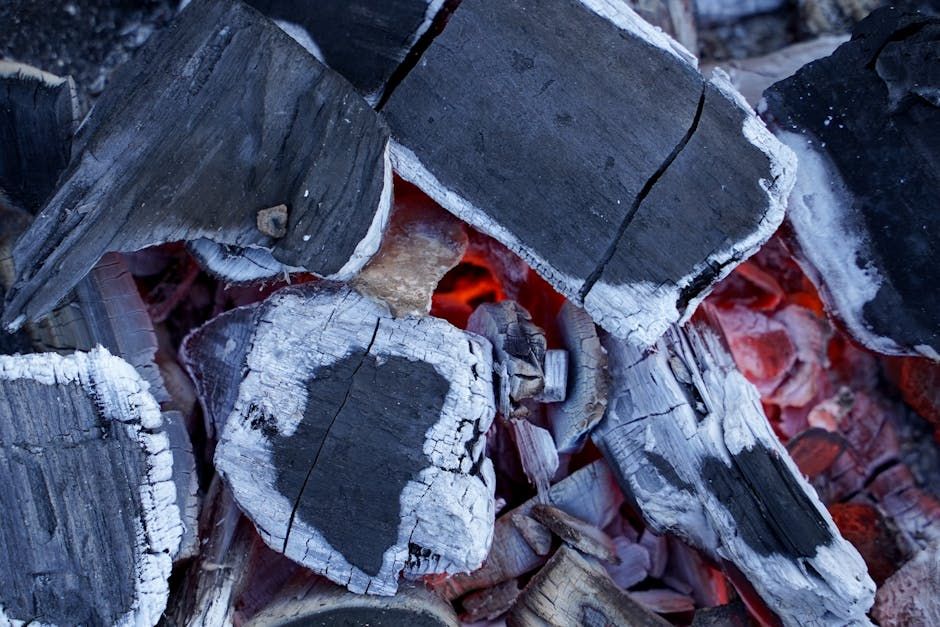
Quebracho sparks. A lot. During the first 10 minutes of lighting in a chimney starter, Jealous Devil throws sparks like a Roman candle. I have tiny burn holes in two shirts from leaning over the chimney during ignition. Keep your face, arms, and any flammable materials at a safe distance until the charcoal is fully lit and ashed over. This is a known characteristic of ultra-dense hardwoods, not a defect, but it is something Jealous Devil's marketing conveniently never mentions.
Who Should Buy This
High-heat searing enthusiasts who need sustained 600°F (316°C)+ for extended sessions. Kamado owners who benefit from low-ash charcoal keeping their vents clear on long cooks. Competition pitmasters who need every marginal advantage. Cooks who are annoyed by the inconsistency and high ash content of cheaper brands. If you fall into these categories and the price does not faze you, Jealous Devil is the best-performing lump charcoal you can buy.
Who Should Not Buy This
Casual weekend grillers who cook burgers and dogs a few times a month. Anyone on a budget — B&B Oak delivers 85% of the performance at 50% of the cost. Low-and-slow devotees who go through fuel slowly anyway. And anyone who expects the premium price to magically make their food taste better — it will not. Charcoal is the heat source, not the seasoning.
The Bottom Line
Jealous Devil is objectively the best-performing lump charcoal I have tested. But "best-performing" and "best value" are very different things. For high-heat applications and kamado owners, the premium is justifiable. For everyone else, I would point you toward B&B Oak or FOGO as the sweet spot of performance and price. A strong 7.8 — excellent product, questionable value proposition for the average backyard cook.
Ventajas
- Burns 40-50% longer than Royal Oak, Cowboy, and other mass-market lump charcoals in controlled testing
- Ash production is genuinely minimal at ~3% — your vents stay clear and airflow stays consistent on long cooks
- Large, hand-selected pieces with minimal dust and fragments — you get what you pay for in piece quality
- Clean-burning with a neutral flavor that lets the wood smoke and meat speak for themselves
Desventajas
- At $2.50-3.00 per pound, it costs roughly double what B&B or Royal Oak charges — and the performance gap does not always justify a 2x price premium
- Retail availability is frustratingly inconsistent — I have had to order online and pay shipping multiple times when local stores ran out
- The 35-lb bag is genuinely awkward to handle — no handles on the sides, and the paper bag tears if you grip it wrong
- Quebracho hardwood sparks aggressively during the first 10 minutes of ignition — keep your face and forearms back when lighting a chimney
- The pieces are SO dense that they take noticeably longer to light than softer lump charcoals — add 5-7 extra minutes to your chimney time
- For low-and-slow cooking where you are burning 4 lbs (1.8 kg) over 12 hours, the performance advantage over a $15 bag of B&B Oak is negligible
El Veredicto
Jealous Devil Lump Charcoal Review: The Fuel That Burns Longer and Hotter
The best-performing lump charcoal on the market, period — but the price premium and limited availability keep it from being an automatic recommendation for everyone.