Charcoal vs Pellet vs Gas: The Honest Comparison Nobody Wants to Make
Ultima actualizacion: 8 de abril de 2026
Why This Comparison Is Always Dishonest
Every "charcoal vs pellet vs gas" article you've ever read was written by someone who already had an opinion before they started writing. Charcoal purists dismiss pellet grills as Easy-Bake Ovens. Pellet grill owners mock charcoal users for babysitting a fire. Gas grill owners ignore both arguments and just want to cook dinner without a PhD in combustion science. Everyone is right about something and wrong about everything else.
I've owned and cooked extensively on all three fuel types for over twenty years. I currently own a Kamado Joe Classic III (charcoal), a Traeger Ironwood 885 (pellet), a Weber Summit S-470 (gas), and an Oklahoma Joe's Highland (stick-burning offset, which is a subset of charcoal). I'm going to compare them on the metrics that actually matter — flavor, cost, convenience, temperature control, and versatility — using real numbers instead of opinions.
Flavor: The Hard Data
I've done blind taste tests with twenty people across eight different cooks. Same cuts of meat (pork shoulder, chicken thighs, and NY strip steaks), same rubs, same temperatures, same cook times. The only variable was the fuel source. Here's what I found:
Brisket and pork shoulder (low-and-slow, 12+ hours): Charcoal (lump + wood chunks) won decisively — 16 out of 20 tasters preferred it. The stick-burning offset was second with 3 votes (same people who preferred the charcoal). The pellet grill got 1 vote. Gas got 0. On long cooks, the flavor difference between charcoal and pellet is clear and consistent. Charcoal with wood chunks produces a deeper, more complex smoke flavor that penetrates further into the meat.
Chicken thighs (1.5-hour cook at 350°F (177°C)): Charcoal and pellet were essentially tied — 9 and 8 votes respectively, with 3 people unable to tell the difference. Gas got 0 votes but several people noted the gas-cooked chicken was "cleaner" tasting, which is a valid preference for some applications. On shorter cooks, the smoke exposure time is reduced, and the flavor gap narrows significantly.
NY strip steaks (direct sear, 8 minutes total): Charcoal won with 12 votes (the sear quality and subtle smoke were noticeable). Gas was second with 6 votes (even, consistent sear, no smoke). Pellet got 2 votes (the sear quality on most pellet grills is poor at stock temperatures). For searing, pellet grills are at a fundamental disadvantage unless they have a dedicated sear feature like the Traeger's direct flame access or a GrillGrate accessory.
Cost Per Cook: The Math Nobody Does
I tracked my fuel costs over six months of regular cooking (averaging 3-4 cooks per week across all grills):
Charcoal (lump): Using Fogo Super Premium at $1.80/lb, a typical Kamado Joe cook uses 5-8 lbs (3.6 kg) for a 4-6 hour cook ($9-14) or 10-15 lbs (6.8 kg) for a 12+ hour cook ($18-27). Add wood chunks at roughly $1-2 per cook. Average cost per cook: $12-18 for moderate cooks, $20-30 for long smokes.
Pellet: Using Traeger Signature Blend pellets at $0.90/lb, the Ironwood 885 burns roughly 1-2 lbs (0.9 kg) per hour at 225°F (107°C) and 2-3 lbs (1.4 kg) per hour at 350°F (177°C)+. A 12-hour brisket cook uses 15-20 lbs (9.1 kg)s ($13.50-18). A 2-hour grill session uses 4-6 lbs (2.7 kg)s ($3.60-5.40). Average cost per cook: $5-8 for moderate cooks, $14-18 for long smokes. Pellets are cheaper per cook than lump charcoal — consistently and measurably.
Gas (propane): A 20 lbs (9.1 kg) propane tank costs about $15-20 to fill and lasts roughly 18-20 hours of cooking on the Summit S-470 with all burners at medium. That works out to roughly $0.75-1.10 per hour. A typical 1-hour grill session costs about $1. A 4-hour roast costs about $4. Average cost per cook: $1-4. Gas is by far the cheapest fuel per cook.
Natural gas: If your gas grill is plumbed to a natural gas line, your cost per cook is essentially cents. This is the cheapest way to grill, period.
Electricity (for pellet grill auger, igniter, fan): Negligible — roughly $0.10-0.30 per cook. I include it for completeness but it doesn't meaningfully affect the comparison.
Convenience: Setting and Forgetting
Gas: 10/10 for convenience. Turn the knob, wait 10 minutes to preheat, cook, turn off, done. Temperature control is instant and precise. No fuel to load, no ash to clean. The cleaning is a quick brush of the grates and an occasional drip tray swap. If convenience is your primary value, gas wins so decisively that the other categories barely matter.
Pellet: 8/10 for convenience. Fill the hopper (takes 30 seconds), set the temperature on the controller or app, wait 15 minutes to preheat, cook. Temperature maintenance is automatic — the auger feeds pellets based on the controller's PID algorithm. You check it occasionally but don't need to tend it actively. Cleaning requires vacuuming ash from the fire pot every 3-5 cooks and emptying the grease bucket. The WiFi app connectivity on modern pellet grills (Traeger WiFIRE, Weber Connect) adds genuine convenience for remote monitoring.
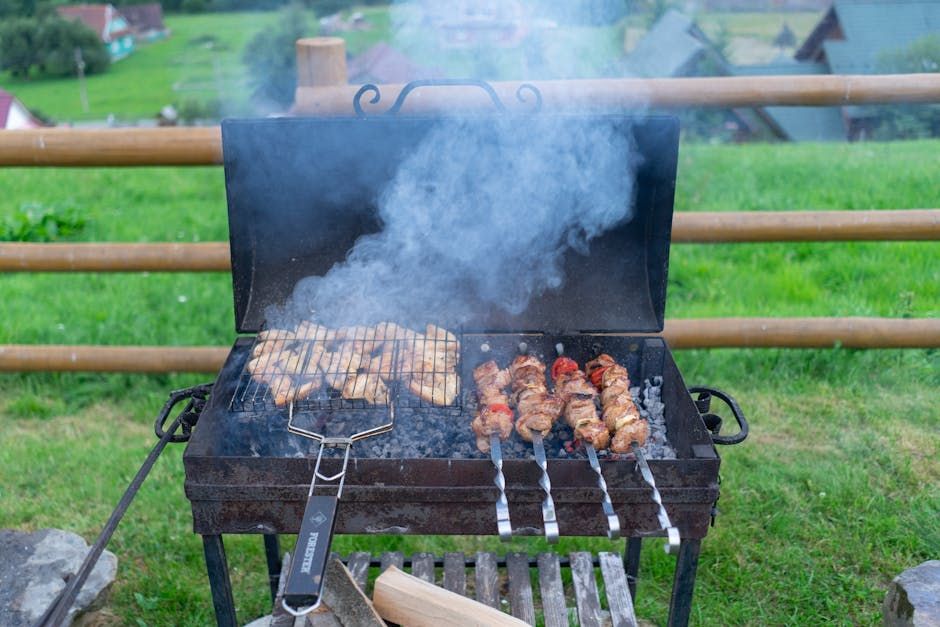
Charcoal: 4/10 for convenience. Loading the firebox, lighting the charcoal (15-20 minutes with a chimney), getting to target temperature (20-40 minutes), maintaining temperature through vent adjustments, managing ash buildup during long cooks, cleaning out ash after every cook. A charcoal cook is an active commitment, especially on long smokes. On a kamado, it's somewhat more hands-off due to the ceramic insulation and tight airflow control, but it's still significantly more work than gas or pellet.
Offset (stick-burning): 1/10 for convenience. This is a full-time job. Building the coal bed (45-60 minutes), adding splits every 45-60 minutes, adjusting dampers constantly, managing fire quality, dealing with weather effects on thin steel. An offset smoker is a hobby, not an appliance. If you view tending a fire as a burden rather than a pleasure, do not buy an offset smoker.
Temperature Control: Precision and Range
Gas: Excellent precision (±5°F (±3°C) with a decent grill), limited range (typically 250°F (121°C)-550°F (288°C)). You can't really go below 250°F (121°C) on most gas grills, which limits low-and-slow capability. The upper range is adequate for searing but doesn't match charcoal at maximum heat.
Pellet: Good precision (±10-15°F (-9°C) with a PID controller), moderate range (165°F (74°C)-500°F (260°C) on most models). The low end is genuinely useful — you can hold 180°F (82°C) for jerky or 225°F (107°C) for brisket. The high end is a weakness — 500°F (260°C) is the ceiling on most pellet grills, and actual grate temperature often runs 20-30°F (-1°C) below the set point at max. Searing on a standard pellet grill is mediocre.
Charcoal (kamado): Good precision with practice (±10°F (±6°C) once stabilized), excellent range (200°F (93°C)-750°F (399°C)+). The kamado's ceramic insulation and tight vent controls allow both extremely low temperatures for smoking and extremely high temperatures for searing and pizza. The range is wider than either gas or pellet, but the control requires skill and experience.
Charcoal (kettle/offset): Fair precision (±15-25°F (-4°C)), excellent range. Less insulated cookers are more susceptible to wind, ambient temperature, and operator error. But they can achieve the same temperature range as a kamado with more attention.
Versatility: What Can Each Fuel Type Actually Do?
Charcoal wins overall. A kamado grill can smoke, grill, sear, roast, bake, and make pizza. A Weber Kettle with a Slow 'N Sear insert is nearly as versatile. An offset smoker is specialized for smoking but can grill in the firebox.
Gas wins for weeknight cooking. Quick preheats, instant control, easy cleanup. It's the microwave oven of outdoor cooking — not the most flavorful, but the most practical for daily use.
Pellet wins for "I want smoke flavor without the commitment." It automates the hardest part of smoking (fire management) and produces good — not great, but good — smoked food with minimal effort. If you smoke 6-10 times per year and don't want to become a fire management expert, a pellet grill is the honest best choice.
The Uncomfortable Bottom Line
If flavor is your top priority: charcoal with wood chunks or an offset smoker. Nothing else matches it for long cooks.
If convenience is your top priority: gas for grilling, pellet for smoking. Don't let anyone shame you for choosing ease of use over marginal flavor differences.
If cost is your top priority: gas (especially natural gas). It's not close.
If you want one grill to do everything: a kamado (charcoal). Highest versatility, best flavor, most work.
If you want two grills to cover everything: a gas grill for weeknight grilling + a pellet smoker for weekend smoking. This is the practical answer that purists hate and normal people love.
The "best" fuel type is the one that matches how you actually cook, not how you wish you cooked. Be honest with yourself about how much time, effort, and attention you're willing to invest. Then buy accordingly and stop arguing about it on the internet.