Control del Fuego 101: Por Qué Tu Offset Smoker Pasa de Infierno a Glaciar
Ultima actualizacion: 8 de abril de 2026
The Single Skill That Matters Most
I can teach someone to season a brisket in five minutes. I can explain injection recipes in ten. Trimming takes maybe an hour of practice. But fire management — the ability to maintain a consistent temperature in a stick-burning smoker for 12+ hours — takes months of practice and a genuine understanding of combustion physics. It is the one skill that separates great barbecue from mediocre barbecue, and it's the one skill that most beginners underestimate completely.
Here's the uncomfortable truth: your offset smoker isn't "hard to use." You just don't understand fire yet. Once you do, the temperature swings stop, the bitter smoke disappears, and everything you cook tastes dramatically better. I'm going to explain the fundamentals — not the simplified version, but the actual physics of what's happening in your firebox and how to control it.
What Smoke Actually Is (And Why It Matters)
Smoke is the visible byproduct of incomplete combustion. When wood burns completely — full oxidation — the products are carbon dioxide, water vapor, and heat. None of those are visible. When wood burns incompletely, you get particulate matter (soot), volatile organic compounds (creosote, phenols, guaiacol, syringol), and various gases. Some of these are desirable flavor compounds. Others are bitter, acrid toxins that make your barbecue taste like a campfire.
The key distinction: thin blue smoke versus thick white/gray smoke.
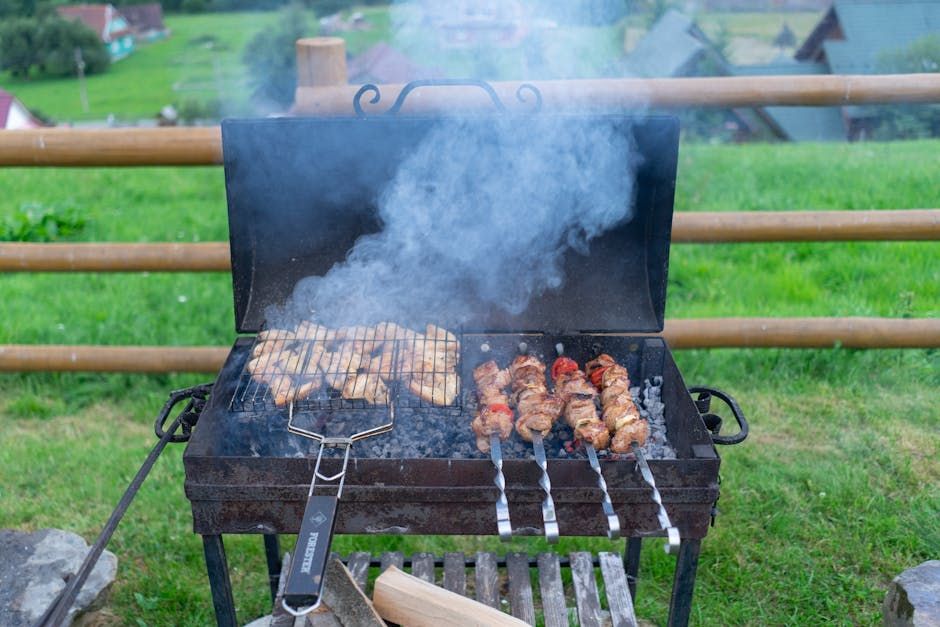
Thin blue smoke is nearly invisible — you see it more as a shimmer or a slight blue haze rising from the chimney. This indicates clean, efficient combustion where the fire is hot enough to burn most of the volatile compounds. The smoke that reaches your meat contains the pleasant flavor compounds (phenols, guaiacol, syringol) without the bitter ones (creosote, heavy tars). This is what you want.
Thick white or gray smoke means the wood is smoldering rather than burning. Smoldering happens when the fire temperature is too low, or when green/wet wood is added, or when airflow is restricted. The volatile compounds are being released from the wood but not burned off because the fire isn't hot enough to combust them. These heavy, unburned compounds coat your meat and taste bitter, acrid, and chemical. Ten minutes of heavy white smoke can ruin 12 hours of careful cooking.
The Coal Bed: Your Temperature Foundation
The single most important concept in offset fire management is the coal bed. The coal bed is the mass of glowing embers at the bottom of your firebox. It is the stable, consistent heat source that maintains your cooking temperature. Split logs added on top of the coal bed are supplemental fuel — they add heat spikes and smoke flavor, but the coal bed is the foundation.
A good coal bed for a mid-size offset (like an Oklahoma Joe's Highland or a Yoder Wichita) is about 3-4-inch (10.2 cm) deep across the bottom of the firebox. Build this initially by burning down 4-5 split logs to embers before you put any meat on the smoker. This takes 45-60 minutes. Yes, you're burning wood with nothing in the cooker. That's not waste — that's building your heat foundation.
Once the coal bed is established, you maintain temperature by adding one split at a time. Not two. Not three. One. A single 16-inch (40.6 cm) hickory or oak split, placed on top of the hot coal bed, will ignite within 2-3 minutes and bring your cooker temperature up by 25-40°F (4°C) before the combustion rate stabilizes. Adding two splits at once causes a temperature spike of 50-80°F (27°C) that takes 20-30 minutes to settle back down. That's the "hot and cold" cycle that frustrates beginners.
When to Add Wood vs. When to Adjust Dampers
This is where most beginners make their biggest mistake. Temperature is dropping, so they add wood. But the temperature was dropping because the previous split hadn't finished igniting — there was a lag between adding fuel and that fuel contributing to heat output. So now they have two heat sources ramping up simultaneously, and the temperature overshoots by 40°F (4°C).
The rule: adjust dampers first, add fuel second.
When temperature drops 10-15°F (-9°C) below target:
- Check the dampers. Is the firebox intake damper open enough? On most offsets, the firebox damper controls 80% of your temperature management. Open it 1/4 turn and wait 5 minutes. If temperature stabilizes or starts climbing, you're done.
- Check the exhaust. The chimney damper (if your smoker has one — some don't) should be fully or mostly open during cooking. Restricting the chimney creates back-pressure that starves the fire. The chimney is not a temperature control — it's an exhaust port. Keep it open.
- If damper adjustment doesn't recover the temperature within 10 minutes, add ONE split. Place it on the hottest part of the coal bed so it ignites quickly. Close the firebox door and wait. Don't peek for at least 5 minutes.
Fire Size: Smaller and Hotter Beats Bigger and Cooler
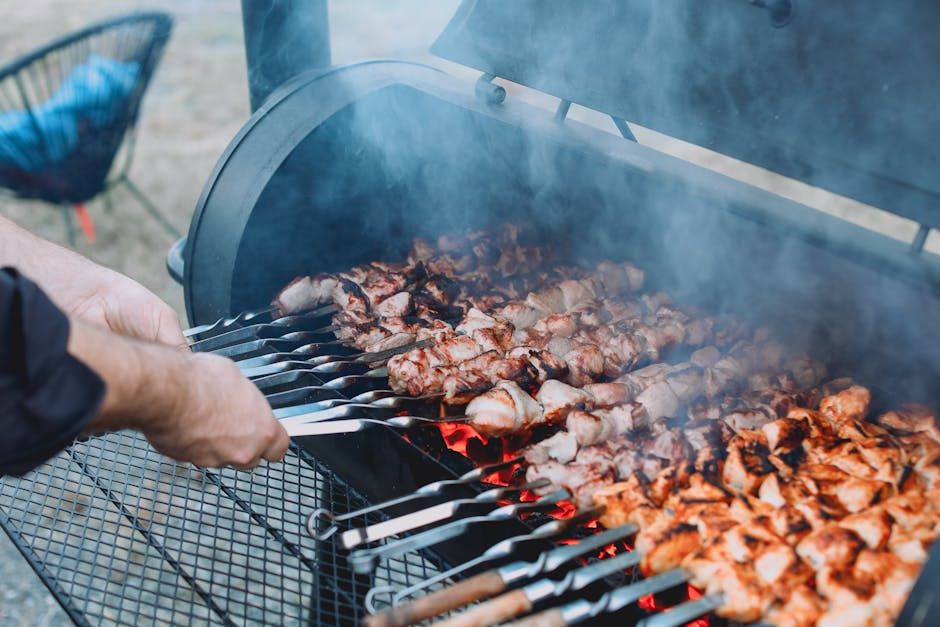
A common misconception is that a bigger fire means more heat. In reality, a bigger fire means more fuel being consumed, more smoke being produced, and less control over temperature. The ideal fire for most offset cooking is small and hot — a compact, intense fire that burns cleanly rather than a sprawling, smoldering pile that produces clouds of smoke.
Picture a fire the size of a basketball, burning intensely with visible flames and a bright orange-yellow core. That's your target. Not a bonfire that fills the firebox — a focused, hot fire sitting on a stable coal bed.
The coal bed handles baseline temperature. The small, hot fire on top adds the incremental heat to reach and hold your target. The smoke produced is minimal — thin and blue — because the fire is hot enough to combust the volatiles. This is clean smoke. This is the goal.
Splits: Size, Species, and Moisture
Size: For most mid-size offsets, splits should be 14-16-inch (40.6 cm) long and 3-4-inch (10.2 cm) in diameter. Smaller splits (wrist-sized) ignite faster and burn out faster — good for quick temperature adjustments but require more frequent tending. Larger splits (thigh-sized) burn longer but take 5-8 minutes to fully ignite, creating temperature lag and more initial smoke.
Species: Oak is the universal workhorse — clean-burning, moderate smoke flavor, widely available. Hickory burns hotter and produces stronger smoke flavor — excellent for pork and beef but can overpower poultry and fish. Cherry and apple produce milder, sweeter smoke and burn cooler — better for poultry, ribs, and anything where you want subtlety. Mesquite burns extremely hot and produces aggressive smoke — use it sparingly and only with beef in South Texas style.
Moisture: Your wood must be seasoned — dried for 6-12 months after splitting. Green (freshly cut) wood contains 40-60% moisture. Seasoned wood contains 15-20% moisture. When you add green wood to a fire, the fire's energy goes toward evaporating water instead of heating your cooker. This drops the fire temperature, creates thick white smoke (steam carrying unburned volatiles), and produces bitter-tasting barbecue. Buy a $20 moisture meter from Amazon and check your wood. If it reads above 25%, don't use it.
The Overnight Cook: When to Sleep and When to Check
For long cooks (12+ hours), you need to decide whether you're tending the fire all night or accepting some temperature variance while you sleep. Here's my approach after twenty years:
Before bed, build the coal bed up slightly — add an extra split and let it burn down to coals. Close the firebox damper to about 1/3 open. The restricted airflow will slow the burn rate, and the extra coal mass will sustain a lower but stable temperature. You'll drop from 250°F (121°C) to maybe 225-235°F (113°C). The meat will cook slower, but it will keep cooking.
Set an alarm for 4 hours. When you check, the coal bed will be depleted and the temperature may have dropped to 200-210°F (99°C). Add two small splits, open the damper to half, and wait 10 minutes for the fire to re-establish. Adjust back to your target temperature, then go back to sleep for another 3-4 hours.
Is this ideal? No. A perfectly tended fire with hourly attention produces better results. But we're human, we need sleep, and a slightly imperfect cook that finishes is infinitely better than a perfect cook that never happens because you refuse to start a 14-hour brisket without a 14-hour commitment to staying awake.
The Two Mistakes That Ruin Everything
Mistake 1: Peeking. Every time you open the cooking chamber door, you lose 20-30°F (-1°C) of accumulated heat and 10-15 minutes of recovery time. Four unnecessary peeks over a 12-hour cook costs you nearly an hour of effective cooking time. Unless you're spritzing, wrapping, or pulling the meat — don't open the door. Monitor temperature with a wireless probe and trust the numbers.
Mistake 2: Chasing the number. Your target is 250°F (121°C), and the temperature reads 238°F (114°C). You add a split. Temperature rises to 265°F (129°C). You close the damper. Temperature drops to 230°F (110°C). You open the damper again. This oscillation cycle continues all day, and your temperature swings are getting worse, not better. Stop. Accept that ±15°F (±8°C) from your target is perfectly fine. Brisket doesn't know the difference between 240°F (116°C) and 260°F (127°C). Your stress level does, but the meat doesn't. Aim for a range, not a number, and make adjustments only when you're outside that range for more than 15 minutes.