GrillGrate Sear Station Review: Turn Any Grill Into a Searing Beast
Ultimo aggiornamento: 8 aprile 2026
A clever accessory that does exactly one thing — amplify heat for better searing — and does it well. But it is not magic, and it comes with tradeoffs that every buyer should understand.
Galleria Foto
What Problem Are We Actually Solving?
The GrillGrate exists because most grills — especially pellet grills and mid-range gas grills — cannot sear worth a damn. A Traeger Ironwood maxes out at 500°F (260°C). A $600 Weber Spirit tops out around 550°F (288°C). Neither of those temperatures will give you the dark, crusty, steakhouse-quality Maillard reaction that makes a great steak great. You need 650°F (343°C)+ for that, and the GrillGrate claims to bridge that gap.
Does it work? Yes. With caveats.
The Physics: Why It Works
GrillGrates are interlocking panels of hard-anodized aluminum with raised rails spaced about 5/16-inch (0.8 cm) apart. The aluminum absorbs heat from the burners or fire below and concentrates it along the top of each rail. Because the panels sit on top of your existing grates (closer to the heat source) and aluminum conducts heat efficiently, the rail surfaces run 100-200°F (93°C) hotter than your grill's ambient air temperature.
I verified this with an infrared thermometer. On my Weber Genesis (ambient 480°F (249°C) with all burners on high), the GrillGrate rail surfaces read 650-685°F (363°C). On my Traeger Ironwood at 500°F (260°C) max, the rails read 620°F (327°C). That is a meaningful increase that pushes into legitimate searing territory.
The Sear: Good But Not Great
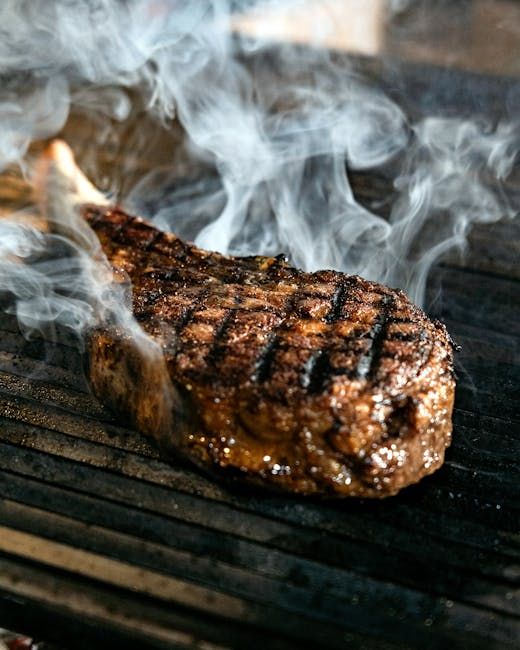
Let me be direct. A GrillGrate sear and a cast-iron-skillet sear are fundamentally different things. Cast iron gives you full-surface contact — every square millimeter of the steak hits the hot metal, producing uniform Maillard browning across the entire face. GrillGrates give you rail contact — defined stripes of intense sear separated by valleys where the meat does not touch metal.
The result looks impressive on Instagram — those defined rail marks photograph beautifully. But in terms of flavor development, you are searing maybe 60% of the meat surface. The 40% between the rails is cooking via convection and steam from the drippings captured in the valleys below. It is good. It is better than what your pellet grill produces without GrillGrates. But it is not the same as a full-contact sear on cast iron, a plancha, or a properly hot charcoal grate.
For pellet grill owners who had zero searing capability before, GrillGrates are a significant upgrade. For charcoal grill owners who can already hit 600°F (316°C)+ on their existing grates, the improvement is marginal and the rail pattern is arguably a downgrade from the broader sear marks of standard cast iron grates.
The Cleaning Problem
Nobody talks about this enough. The narrow valleys between the rails trap food debris, melted fat, and especially any sugary or cheese-based residue. The included GrateTool — a custom spatula designed to slide between the rails — works for scraping off stuck proteins, but it does not fully clean the valleys.
My cleaning routine: scrape with the GrateTool while the grill is hot, then soak the panels in hot soapy water, then use a stiff brush to get into the valleys. For straightforward steak cooks, cleanup is manageable. For anything involving melted cheese (smash burgers), barbecue sauce (glazed chicken), or fatty fish (salmon), expect 15-20 minutes of dedicated cleaning. Standard grill grates take me 30 seconds with a wire brush.
Dishwasher? Technically no, and the anodized coating will degrade over time with dishwasher use. Some people do it anyway. I do not recommend it.
Thermal Mass and Recovery
Aluminum heats up fast but also cools down fast. Place a cold 1.5-pound ribeye on a 680°F (360°C) GrillGrate panel, and the surface temperature drops 80-100°F (38°C) instantly. It recovers in about 60-90 seconds, but that first minute of contact is significantly cooler than you think. For a single steak, this barely matters. For searing four steaks in sequence, the fourth steak gets a noticeably weaker sear than the first — I tested this with identical steaks and measured the crust depth with a caliper.
The workaround is to give the panels 90 seconds to recover between steaks, or flip the first steak and use the adjacent panel for the second steak. Workable, but it requires planning that a cast iron griddle or thick steel grate does not demand.
Best Use Case: Pellet Grill Searing
Where GrillGrates make the most sense — and where I genuinely recommend them — is on pellet smokers. If you own a Traeger, Camp Chef, RecTeq, or any pellet grill, your searing capability is mediocre at best. GrillGrates transform that from a weakness to a respectable strength. I now leave a set of GrillGrate panels on my Ironwood 885 permanently, and the searing results are dramatically better than the stock porcelain grates.
For gas grill owners with grills that already hit 550°F (288°C)+, the upgrade is less compelling. And for charcoal grill or kamado owners who can hit 700°F (371°C)+ natively, GrillGrates are unnecessary and arguably counterproductive — they reduce your cooking surface and add a rail pattern that charcoal does not need.
The Price Question
A single GrillGrate panel runs $40-55 depending on size. Most grills need 3-4 panels for full coverage, putting the total at $120-200. For a set of aluminum grate replacements, that is expensive. The lifetime warranty helps justify it — these panels are durable and I have seen zero warping or degradation in 8 months — but the upfront cost gives me pause when a Lodge cast iron griddle achieves a better full-contact sear for $40.
Who Should Buy This
Pellet grill owners who want dramatically improved searing capability. Gas grill owners with mid-range grills that max out below 550°F (288°C). Anyone who cooks a lot of steaks and wants better results without buying a new grill. People who value the no-flareup design for fatty meats.
Who Should Not Buy This
Charcoal grill and kamado owners — you already have better searing capability natively. Cooks who want uniform all-over crust rather than rail marks. Anyone who hates cleaning small crevices. Budget-conscious buyers — a cast iron skillet or griddle insert is a cheaper path to better searing.
The Bottom Line
GrillGrates are a good product solving a real problem for a specific audience: pellet grill owners who want to sear. For that audience, they are worth every penny. For everyone else, the rail pattern, cleaning hassle, and price push them into "nice to have" territory rather than "must own." A solid 7.5 — functional, well-built, but not the universal upgrade the marketing suggests.
Pro
- Genuinely amplifies grill temperature by 100-200°F (93°C) — I measured 685°F (363°C) on a grill that maxes out at 500°F (260°C)
- Universal fit works on gas, charcoal, pellet, and kamado grills — true versatility
- Hard-anodized aluminum construction shows zero warping after 8 months of heavy use
- Eliminates flare-ups by capturing drippings in the valleys between rails
- Turns a pellet grill from a decent griller into a respectable searing machine
Contro
- Creates distinctive rail-pattern sear marks instead of an all-over uniform crust — if you want edge-to-edge Maillard browning, this is not your tool
- Cleaning between the narrow rails is genuinely tedious — the included GrateTool helps but does not solve the problem, especially with melted cheese or sugary sauces
- Full grill coverage for a standard gas grill runs $150-200, which is a lot for what is essentially a grate replacement
- The valleys between rails steam food slightly rather than searing it, meaning only about 60% of the meat surface gets direct contact heat
- Blocks infrared radiation from the heat source below, which means areas between the rails cook differently than areas on the rails
- Aluminum construction transfers heat fast but also cools down fast when you place cold food on it — the first steak sears better than the fourth
Il Verdetto
GrillGrate Sear Station Review: Turn Any Grill Into a Searing Beast
A legitimate searing upgrade for pellet grill and gas grill owners who want steakhouse-quality crust, but the rail-pattern marks and cleaning hassle keep it from being a universal recommendation.