Ultimo aggiornamento: 9 aprile 2026
Questa Cottura Ti Metterà in Ginocchio
Sarò onesto con te: il tuo primo brisket sarà probabilmente mediocre. Forse anche il secondo. Il brisket è la cosa più difficile da affumicare bene, e chiunque ti dica che il suo primo tentativo era perfetto o sta mentendo o ha avuto culo. Affumico brisket da 15 anni e ancora ogni tanto mi capita una cottura che non va come avevo pianificato.
Detto questo, questa ricetta ti dà il framework che ha prodotto i miei migliori brisket. È l'approccio purista del Central Texas — pepe nero macinato grosso, sale kosher, fumo di post oak e tempo. Niente iniezione, niente rub elaborato con 14 ingredienti, niente fumo liquido o altre scorciatoie. Solo manzo e fuoco.
Cosa Può Andare Storto (E Succederà)
- Lo Stallo: Intorno ai 66-77°C di temperatura interna, il raffreddamento evaporativo bloccherà la temperatura per 2-6 ore. Non farti prendere dal panico. Non alzare il calore. Aspetta oppure avvolgi in carta da macellaio a 74°C.
- Flat Secco: Il flat (la parte magra) si secca prima che il point (la parte grassa) sia cotto. Questo è il fallimento numero 1 col brisket. Soluzione: compra USDA Choice o Prime con buona marezzatura, non rifilare il cappello di grasso sotto i 0,6 cm, e valuta di avvolgere una volta che la bark si è formata.
- Sbalzi di Temperatura: Se il tuo smoker schizza a 149°C+ per un periodo prolungato, la bark diventa amara e l'esterno cuoce troppo prima che l'interno abbia reso il grasso. Mantieniti sui 107-135°C. La costanza batte la velocità, sempre.
- Non Far Riposare Abbastanza: Un brisket DEVE riposare minimo 1 ora, idealmente 2-4 ore. Salta questo passaggio e tutto quel collagene reso cola fuori quando affetti. Il tagliere sarà un lago di succo che dovrebbe essere nella carne.
- Grado di Carne Sbagliato: Il brisket di grado Select ha troppo poca marezzatura. Sarà secco e duro qualsiasi cosa tu faccia. Spendi quei 4-5 €/kg in più per un Choice come minimo, Prime se lo trovi.
Inizia presto — parlo delle 4 o 5 del mattino per un brisket pronto a cena. Calcola 130-200 minuti per kg a 121°C, più 2-4 ore di riposo. Un packer da 6,5 kg può richiedere 16-18 ore dal fuoco alla tavola. Questa non è una cottura che puoi affrettare.
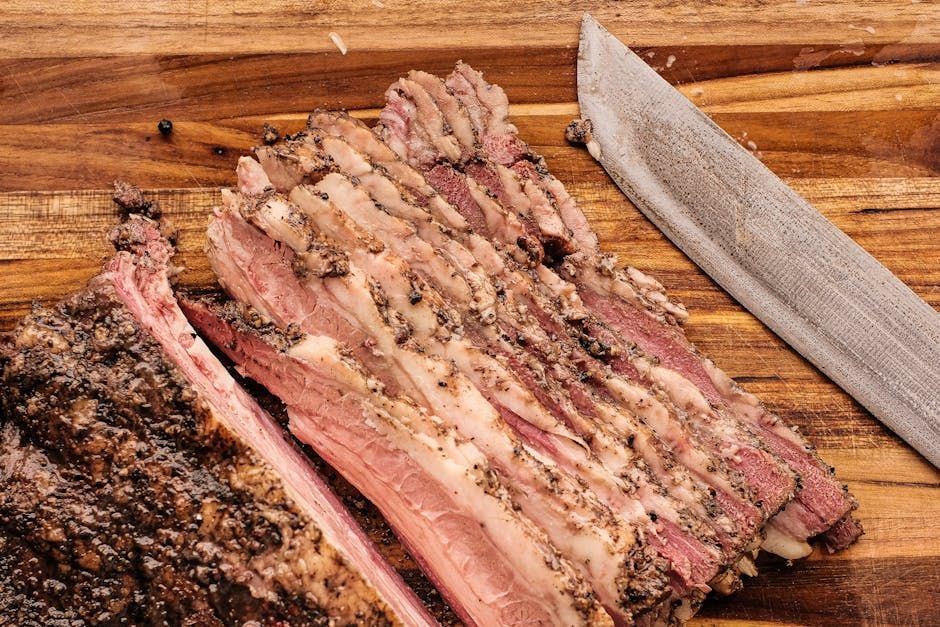
Texas-Style Smoked Brisket — Brisket Affumicato alla Texana
Scan for full recipe
https://bbq-experience.com/it/ricette/texas-style-smoked-brisket
Ingredienti
- 14 lbs Whole packer brisket (USDA Choice or Prime)
- 0.5 cup Coarse black pepper (16-mesh)
- 0.3 cup Kosher salt (Diamond Crystal)
- 8 lbs Post oak wood splits or chunks
- 2 tbsp Yellow mustard (binder, optional)
- 4 oz Beef tallow (for wrapping, optional)
- 1 roll Butcher paper (pink, unwaxed)
Istruzioni
-
Remove brisket from packaging the night before and let it sit uncovered in the fridge overnight — this dries the surface and promotes better bark formation. The next morning, trim the fat cap to 1/4-inch (0.6 cm), no thinner. Remove the hard crescent of fat between the point and flat. Square off the thin edges of the flat — those wispy bits will burn to charcoal. Save the trimmings for grinding into burger meat.
-
Mix coarse 16-mesh black pepper and Diamond Crystal kosher salt at a 2:1 ratio by volume. If using mustard as a binder, apply a thin coat to all surfaces first — it burns off completely and just helps the rub stick. Apply the rub HEAVILY. When you think you have used enough, add more. The bark formation depends on a thick layer of seasoning. Let the brisket sit at room temp for 1 hour while you get the smoker going.
-
Fire up your smoker and stabilize at 250°F (121°C) using post oak as your primary wood. For an offset: build a coal bed from a full chimney of lump charcoal, then add post oak splits (forearm-sized) every 45-60 minutes. You want thin, blue smoke — NOT billowing white clouds. If you see thick white smoke, your fire is smoldering. Open the firebox damper and let it breathe. For a kamado: fill the firebox with lump charcoal and add 3-4 fist-sized oak chunks throughout.
-
Place the brisket fat-side down if your heat comes from below (offset, kamado), fat-side up if heat comes from above or behind (some cabinet smokers). The fat cap protects whichever side faces the heat source. Insert a leave-in probe into the thickest part of the flat, angled toward the center — avoid hitting fat pockets, which read lower than the surrounding meat. Close the lid and DO NOT OPEN IT for at least 3 hours. Every time you peek, you lose 15-20 minutes of recovery time.
-
Maintain 225-275°F (135°C) smoker temperature for the duration. Around hour 4-6, check the bark — you want a dark mahogany color and a surface that feels like dry leather when you press it. The internal temp will stall around 150-170°F (77°C). This is the stall — moisture evaporating from the surface cools the meat faster than the smoker heats it. It can last 2-6 hours. Do NOT increase your smoker temp. Wait it out, or proceed to the optional wrap at step 6.
-
Optional but recommended for beginners — the Texas Crutch: When internal temp hits 165°F (74°C) AND the bark is set (dark, dry, firm), wrap in pink (peach) butcher paper. NOT aluminum foil — foil traps steam and turns your bark to mush. If using beef tallow, drizzle 2-3 oz (88.7 ml) over the top before wrapping. The tallow bastes the meat and adds richness. Wrap snugly but not airtight — you want some breathability. Return to the smoker immediately.
-
The brisket is done when two conditions are met simultaneously: internal temperature of 200-205°F (96°C) AND the probe slides in with zero resistance — like pushing into room-temperature butter. Temperature alone is NOT sufficient. I have had briskets probe-tender at 197°F (92°C) and others that needed 208°F (98°C). The connective tissue renders at different rates depending on the specific animal. If it hits 203°F (95°C) but the probe still meets resistance, keep cooking.
-
Pull the brisket and rest it in a dry cooler (no ice) lined with old towels. Place the wrapped brisket inside, cover with more towels, and close the lid. MINIMUM rest: 1 hour. IDEAL rest: 2-4 hours. The internal temp will coast up a few degrees, then slowly drop. You can safely hold a brisket in a cooler for up to 6 hours without it dropping below serving temperature. This rest period is non-negotiable — it allows the rendered collagen to reabsorb into the meat fibers.
-
Unwrap and slice. The flat gets sliced against the grain in pencil-thick slices (about 1/4-inch (0.6 cm)). Each slice should hold together when picked up but pull apart with a gentle tug. If it falls apart, you overcooked it. If it does not bend, you undercooked it. Separate the point from the flat along the fat seam, rotate the point 90 degrees (the grain runs perpendicular to the flat), and slice against the point's grain. Serve immediately with white bread, dill pickles, white onion slices, and sauce on the side — not on the meat.